

University of Illinois Extension
University of Illinois Extension - Selecting Trees for Your Home
http://www.urbanext.uiuc.edu/treeselector
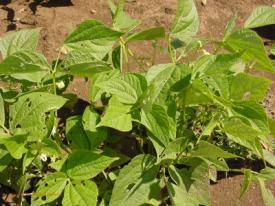
Beans
Phaseolus vulgaris, P. lunatus
Size:

Small

Medium

Large
Exposure/ Light Requirements:
Full Shade not required.
Full Shade
Full Sun required.
Full Sun
Partial Sun/Shade not required.
Partial Sun/Shade
Pests and Problems:

Bacterial Disease

Environmental Damage

Fungal Disease

Herbicide Injury

Insect Damage


Insect pests:

  • Seed corn maggot
  • Mexican bean beetle
  • Black bean aphid
  • Thrips
  • Wireworm

Diseases:

  • Asian soybean rust (Phakospora pachyrhizi)
  • Sclerotina white mold (Sclerotinia sclerotiorum)
  • Soybean cyst nematode (Heterodea glycine)
  • Root knot nematodes (Meloidogyne spp.)
  • Root Rots: Fusarium root rot (Fusarium solani), Pythium root rot (Pythium spp.), Rhizctonia root rot (Rhizoctonia solani), Thielaviopsis balck root rot (Thielaviopsis basicola)
  • Virus Diseases: Common bean mosaic, Yellow mosaic

Environmental:

  • Bronzing caused by ozone pollution
Hardiness Zone:  
[Find Your Zone]
Culture: The bean is a tender, warm season vegetable that ranks second to tomato in popularity in home gardens. Beans can be classified by growth habit (bush or pole), use (immature pods, seeds, and dry beans), and the type (green, yellow, white). Bush Beans stand erect without support. They yield well and require the least amount of work. Green bush beans were formerly called "string beans" because fiber developed along the seams of the pods. Plant breeders have reduced these fibers through selection and green beans are now referred to as "snap beans." Pole Beans climb supports and are easily harvested. Seeds of most varieties tend to crack and germinate poorly if the soil's moisture content is too high. For this reason, never soak bean seed before planting. Instead water just after planting or plant right before a heavy rain. Beans have shallow roots and frequently shallow cultivation and hoeing are necessary to control small weeds and grasses. Because bean plants have fairly weak root systems, deep, close cultivation injures the plant roots, delays harvest and reduces yields.
Cultivars:
  • Green Bush Bean Varieties: Blue Lake 274 (58 days to harvest; plump, tender pods; slow-developing seeds; resistant to bean mosaic), Bush Kentucky Wonder (57 days; long, flattened pods), Derby (57 days; 1990 AAS winner; slim, tender, prolific; excellent pods), Strike (55 days; light green; high yielding), Greencrop (55 days; flat pods; tender; excellent flavor)
  • Waxy Bush Bean Varieties:  Cherokee Wax (55 days; dark yellow pods; highly productive), Sunburst (51 days; yellow, smooth pods; white seeds), Gold Rush (53 days; yellow pods; white seeds; prolific), Carson (56 days; higher disease resistance; higher yields; white seeds), Goldito (52 days; stringless wax; semi-upright plant; white seeds)
  • Romano Bush Bean Varieties: Romano Gold (56 days; wax; dwarf; long flat pods, white seeds), Roma (55 days; green pods)
  • Romano Pole Bean Varieties:   Romano (66 days)
  • Lima Bush Bean Varieties: Allgreen (67 days), Baby Bush (70 days); Eastland (70 days; seeds have good cold soil tolerance; heavy yields; tolerant to downy mildew; white seeds), Fordhook 242 (70 days; tolerant to heat; excellent flavor)
  • Lima Pole Bean Varieties: King of the Garden (85 days; broad smooth pods), Big 6 (72 days), and Prizetaker (90 days).
  • Green Pole (Snap Bean) Varieties: Blue Lake (65 days to harvest; oval, straight, stringless, juicy and tender pods; resistant to bean mosaic), Kentucky Blue (65 days; AAS Winner; round; 7 inch pods), and Kentucky Wonder (65 days; fine flavor, 9 inch pods in clusters).
  • Horticultural Bean Varieties: French Horticultural Bush (68 days; lots of runners; straigh pods with splashes of red and yellow color; beige/brown seeds), Teggia (68 days; red/yellow pods; no runners; buff/red seed).
  • Dry (Bush Type) Bean Varieties: Carnberry (95 days), Great Northern (100 days), Pinto (90 days), Red Kidney (95 days).
Mature Form:
Native To:
Soil Conditions:
Dry
Soil condition: Moist, Well-DrainedMoist, Well-Drained
Wet
Tolerance:
Alkaline Soil
Dry Sites
Salt
Soil Compaction
Wet Sites
Wind
Uses:
Massing
Patio
Screen
Shade
Specimen
Street
Wind Break
Foliage Color:  
Fall Foliage Color:  
Additional Notes: Require well-drained soil, and uniform moisture supply. Practice crop rotation to reduce build up of soil-borne diseases. Seeds of most beans tend to crack and germinate poorly when soil moisture content is very high. Do not soak bean seeds before planting or watered immediately after planting. Beans are shallow rooted so don't cultivate deeply closer to the stem.
